Barbie Has Taken Stands on Social Issues Since 1959, and Social Media Amplified It
A book chapter traces Barbie's history of taking positions on social issues and analyzes the brand's Instagram and TikTok accounts. It asks whether that activism reads as authentic and how consumers shape the causes the brand adopts.
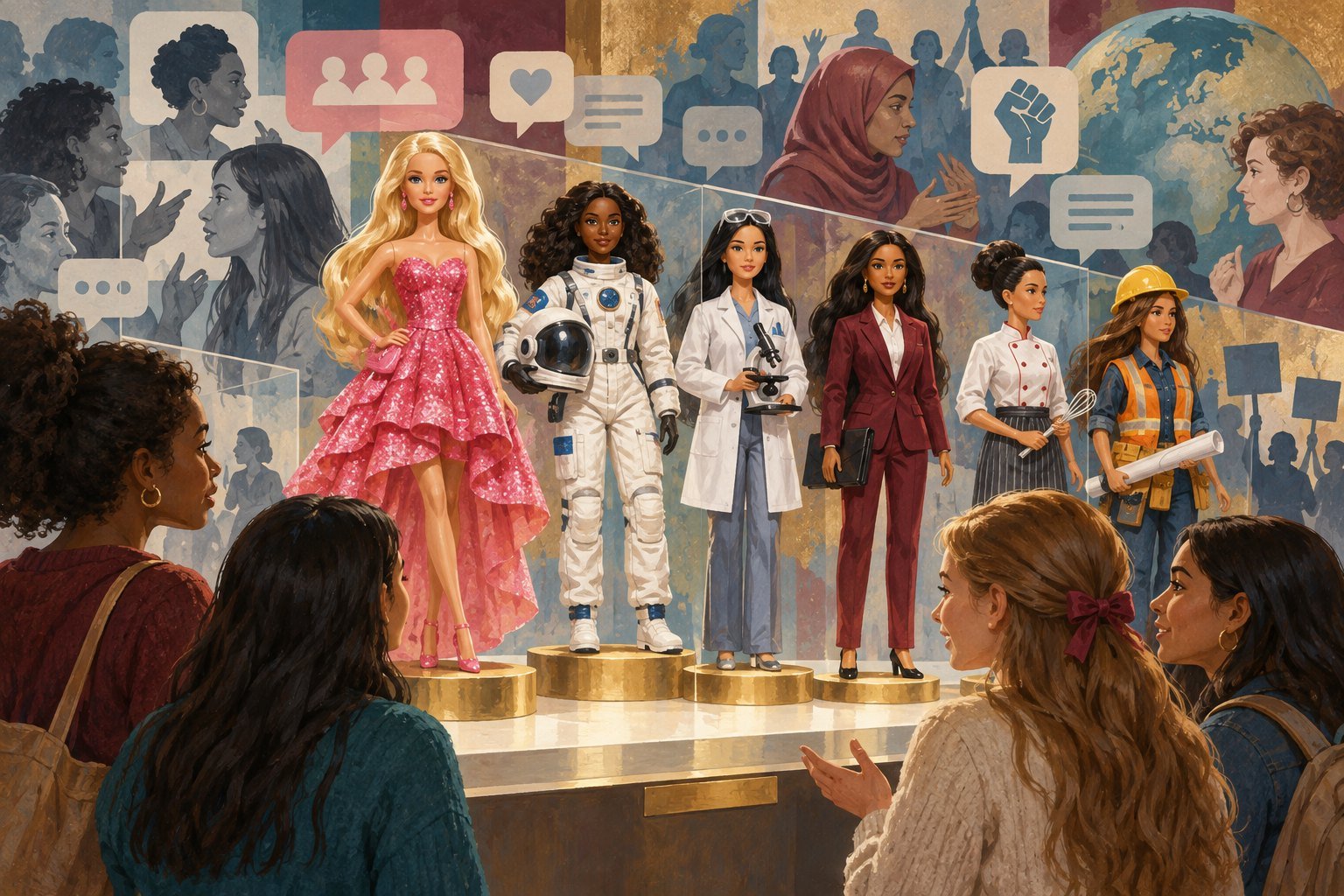
This item is a book chapter, not a journal article. It appears in #Barbie and Social Media: Digital Discourses and Mattel’s Celebrity Doll, an edited volume published by Palgrave Macmillan in 2025. The chapter argues that Barbie has practiced brand activism since the doll’s first television commercial in 1959. Social media, it adds, has widened the audience for that activism.
Fernanda Muniz, Assistant Professor of Marketing in the Department of Marketing at Texas State University’s McCoy College of Business, is a co-author. She wrote the chapter with Andrea R. Bennett of Texas Woman’s University.
What brand activism means
Brand activism is the term for a company adopting a value-driven, non-neutral stance on a sociopolitical issue. It differs from ordinary corporate social responsibility because it takes a side. The authors treat Barbie as an early and lasting example, with roots that predate the current wave of purpose-driven marketing.
The chapter’s approach
The authors draw on two frameworks. Cultural branding holds that strong brands earn their place by speaking to tensions in the culture around them. Stakeholder theory holds that a company answers to many groups, not only shareholders, and those groups shape its choices.
With those lenses, the chapter does two things. First, it builds a genealogy of Barbie, a historical account of how the brand’s positions formed and changed over time. Second, it conducts a thematic analysis of the @Barbie accounts on Instagram and TikTok. That means sorting posts into recurring themes to examine the brand’s present-day activism.
What the authors argue
The chapter traces a long arc. Barbie began as a feminist icon. She then came to be criticized as an object that reinforced harmful gender stereotypes. She has since returned to the role of social activist. The authors argue that media, and especially social media, drove each turn along that path. Social platforms let the brand reach a broader audience. They also let it join conversations about controversial issues that matter to its target customers.
The chapter also examines whether Barbie’s activism is perceived as authentic. And it argues that the brand’s consumers are not passive. Their expectations and reactions help determine which issues the brand takes up and what positions it takes.
What it means for brand managers
The chapter is an analysis of one brand rather than a test of a general theory. Still, it offers a few lessons for managers weighing whether to take a public stance. History matters, because audiences read today’s message against the brand’s record. Stakeholders matter, because customers help set the agenda whether the brand invites them or not. And channel matters, because social media both amplifies activism and exposes it to immediate scrutiny.
This summary is based on the chapter’s abstract. The full chapter reports the historical account and the detailed analysis.
What it means for managers
- Brand activism means taking a value-driven, non-neutral stance on a sociopolitical issue. The chapter argues Barbie's version has deep roots rather than being a recent marketing turn.
- Authenticity is judged against history. A brand's past positions, including its missteps, shape whether audiences believe its current activism.
- Consumers help set the agenda. The chapter argues that Barbie's customers inform which issues the brand takes on and the stances it adopts.
Bennett, A. R., & Muniz, F. (2025). Barbie: The original brand activist. In #Barbie and social media: Digital discourses and Mattel's celebrity doll (pp. 65-90). Palgrave Macmillan. 10.1007/978-3-031-95611-9_4
Related

What Happens When Ads Say They Were Made With AI
A new study led by a McCoy College marketing professor tests how disclosing that an ad was generated by AI affects consumer attitudes, purchase intent, and social media engagement. The abstract was not available when this summary was written, so results are not reported here.
Rick Wilson
When a Health App Says You Are Safe, You May Take More Risks
AI wearables and health apps are sold on safety. A new framework explains why that reassurance can lead people to skip the doctor, push past their limits, and rely on a device to catch what it cannot see.
Sidney T. Anderson
Celebrity Brands Lift Stores When the Star, Product, and Shelf Fit
Celebrity brands make a store more attractive when the celebrity fits the product category, fits the store, and fits the store's other brands. That attraction feeds store equity and loyalty, and the effects differ for shoppers who idolize celebrities.
Vishag Badrinarayanan, Enrique P. Becerra, Jeremy J. Sierra