Four Ways to Blend Physical and Digital Customer Experiences Into a Business Model
A study of 33 global cases sorts phygital customer experiences into four types and shows how firms can turn them into repeatable, scalable business models that create value for customers and society.
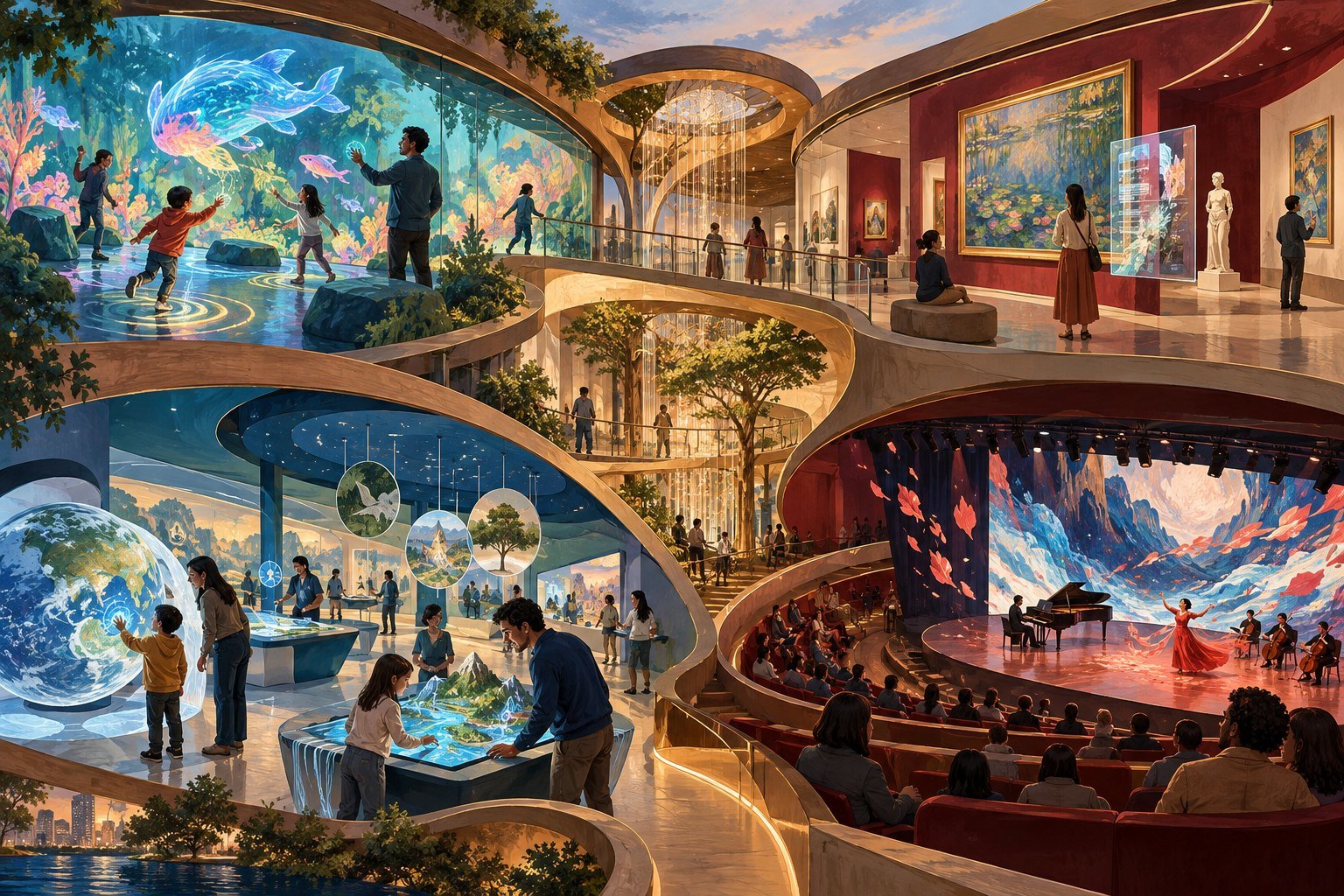
Phygital is a blend of two words, physical and digital. It describes customer experiences that mix in-person and online interactions into one journey. A hotel that lets guests unlock a room with a phone, or a store that adds augmented reality to a fitting room, is offering a phygital experience.
Firms have been building these experiences for years. What they have lacked is a shared map of the business models behind them. A new paper in the Journal of Macromarketing by Taewon Suh, Professor of Marketing at the McCoy College of Business at Texas State University, offers one.
The study
Suh examined 33 global cases from 2020 to 2025 spanning several industries. He drew on three bodies of thinking. The first is the experience economy, the idea that firms compete by staging memorable experiences rather than selling goods alone. The second is experiential value, which asks what customers actually get out of an experience. The third is business model configuration theory, which treats a business model as a set of parts that can be arranged in different ways.
From these, the paper builds a typology, a structured classification, of phygital customer experience business models.
Four experiential domains
The typology sorts experiences into four domains. Escapist experiences pull customers into another setting, as in immersive games or virtual travel. Esthetic experiences invite customers to take in a designed environment, such as a flagship store or an installation. Educational experiences help customers learn something. Entertainment experiences are there to be enjoyed.
Each domain is then placed along two dimensions. Digitalization measures how much of the experience runs through screens, sensors, and software. Physicalization measures how much depends on bodies, places, and objects. A firm can locate its own offering on this grid and see which models resemble it.
Experiences as modules
A central claim of the paper is that experiential elements behave like modules. They are dynamic and can be recombined. A retailer might pair a physical event with a digital loyalty layer this year and swap in a virtual showroom next year. The business model does not have to be rebuilt each time. Only the modules change.
The paper identifies three mechanisms that make this work. The first is interaction and touchpoint design, the deliberate choice of where and how customers meet the brand. The second is iterative testing, launching small, learning, and adjusting. The third is scalable monetization, a way to earn revenue that grows with the experience rather than stalling at pilot size. Together these support sustained engagement and value for more than one stakeholder.
Why it reaches beyond the firm
The journal’s focus is macromarketing, the study of how marketing affects society. Suh links firm-level strategy to customer and societal experience through what he calls a human-centric, participatory lens. Phygital ecosystems are not only revenue engines. They can support responsible innovation and digital transformation that is inclusive and sustainable, or they can fail to.
What it means for managers
For executives planning digital investments, the typology offers a way to ask sharper questions. Which of the four domains is the offering in? How digital and how physical should it be? Which modules could be swapped without starting over? And is there a monetization path that scales?
The framework also gives a common vocabulary to teams from marketing, operations, and technology who often talk past each other when building hybrid experiences.
This summary is based on the paper’s abstract. The full article reports the case selection, the typology in detail, and the supporting analysis.
What it means for managers
- Decide which experience you are selling. The four domains, escapist, esthetic, educational, and entertainment, call for different mixes of physical and digital touchpoints.
- Treat experience elements as modules. Firms that can recombine and retest touchpoints adapt faster than those locked into one format.
- Design the money side early. Scalable monetization, iterative testing, and touchpoint design are what turn a clever experience into a durable ecosystem.
Suh, T. (2026). Conceptualizing a business model typology of phygital customer experience to build and manage phygital ecosystems. Journal of Macromarketing, 46(3), 364-386. 10.1177/02761467251411511
Related
What Happens When Ads Say They Were Made With AI
A new study led by a McCoy College marketing professor tests how disclosing that an ad was generated by AI affects consumer attitudes, purchase intent, and social media engagement. The abstract was not available when this summary was written, so results are not reported here.
Rick Wilson
When a Health App Says You Are Safe, You May Take More Risks
AI wearables and health apps are sold on safety. A new framework explains why that reassurance can lead people to skip the doctor, push past their limits, and rely on a device to catch what it cannot see.
Sidney T. Anderson
Celebrity Brands Lift Stores When the Star, Product, and Shelf Fit
Celebrity brands make a store more attractive when the celebrity fits the product category, fits the store, and fits the store's other brands. That attraction feeds store equity and loyalty, and the effects differ for shoppers who idolize celebrities.
Vishag Badrinarayanan, Enrique P. Becerra, Jeremy J. Sierra